Learning How to Live
What did you learn working at restaurant Monk in Kyoto?
Working at Monk was not just about learning cooking techniques. It was about learning how to live.
Of course, I learned about vegetables and fire and the wood-fired oven. But there’s something Imai-san once said to me that left a deep impression.
He told me, “From now on, it’s better to live a life where you polish your heart.”
That changed me. I realized that being a good chef wasn’t only about technical ability—it was about how you live and how you relate to others.
Imai-san looked at children and vegetables with the same care. And he often talked about sanpō yoshi—a Japanese philosophy that means “good for all three sides.”
It means: good for the maker, good for the receiver, and good for society. Good for the environment, your family, your team. It shaped how I see everything now.
Challenging Simplicity
After Monk, you went on to work at Noma in Copenhagen.
How did that experience change you?
My time at Noma was… hard to put into words. It felt too big to contain—it shifted everything.
The food, the organization, the way they think… It all expanded my sense of scale. I had come with a very pure and simple mindset—something I’d learned from Imai-san at Monk.
At Noma, that simplicity was challenged and expanded.
The team was incredibly diverse, people from all over the world, but with a shared mindset. It felt like a small community with a very deep soul.
There are two phrases that stayed with me strongly from that time:
“Leave no doubt” and “Pressure is a privilege.”
What did “leave no doubt” mean for you?
One day, during a meeting after dinner service at Noma, our head chef at the time, Kenneth, explained the meaning of that phrase. It was written on the wall outside the locker room and left behind by the head chef before him.
He said it doesn’t matter whether a guest says, “This was amazing” or “This wasn’t good.”
What matters is that we, as a team, did our very best today. We gave everything. So there’s no doubt in our hearts.
That kind of attitude really inspires me.
Pressure is Privilege
And “pressure is a privilege”?
That one was also shared with us by our head chef Kenneth, but originally comes from the world of tennis—Wimbledon, I think. Above the walkway where the players enter the court, it says: “Pressure is a privilege.”
And it’s true. At Noma, there was so much pressure. I was nervous, sometimes even fighting with colleagues. But I realized that this pressure is something to be grateful for.
Not everyone gets to experience it. It’s a gift.
And in that way, it reminded me of Zen—this call to be fully present, to dive into the moment, no matter what.
That was also the first time you lived outside Japan for a longer period. Did it shift how you relate to Japanese culture—what it means to be Japanese?
Yes, very much.
Being outside Japan helped me see my own culture more clearly—both the beauty and the parts I find difficult. I realized that I carry a certain sensibility that’s both unique and… sometimes hard to explain.
But with distance, I could begin to notice what is truly valuable in Japanese culture—and how that might be shared or transformed.
It still feels like an ongoing exploration, but it has strongly influenced how I cook and how I live.
A Touch of Pure Japanese
Now that you’re working as an independent chef, you use the phrase “a touch of pure Japanese” to describe your cooking.
What does that mean to you?
Yes. Actually, the phrase “touch” came from my time at Noma.
In the kitchen, when something needed just a little salt, someone would say, “Just a touch more.” I realized that “touch” can mean something very subtle—not just physical, but an influence that’s barely visible, yet deeply felt.
So when I say “a touch of pure Japanese,” I mean allowing the Japanese spirit, the aesthetics, the sensibility—to gently influence what already exists.
It’s not about being loud or traditional. It’s about something delicate and respectful—a quiet gesture that carries meaning.
And “touch” can also mean: it moves the heart.
I want my cooking to do that. Not just to impress, but to move something in the person who’s eating.
Cooking As a Language
You’ve spoken about wanting to reinterpret Japanese ingredients and aesthetics in your dishes. What kind of experience do you hope to create for people?
I’m still shaping that vision, but let me share a small story.
I love Haruki Murakami’s writing. In one of his nonfiction books, he talks about language as a tool. He also says that by deeply following the potential of a tool—like language—we can renew it.
That really resonates with me. I feel the same about cooking. Cooking is my language, and I want to explore its possibilities—not just repeat what’s been done.
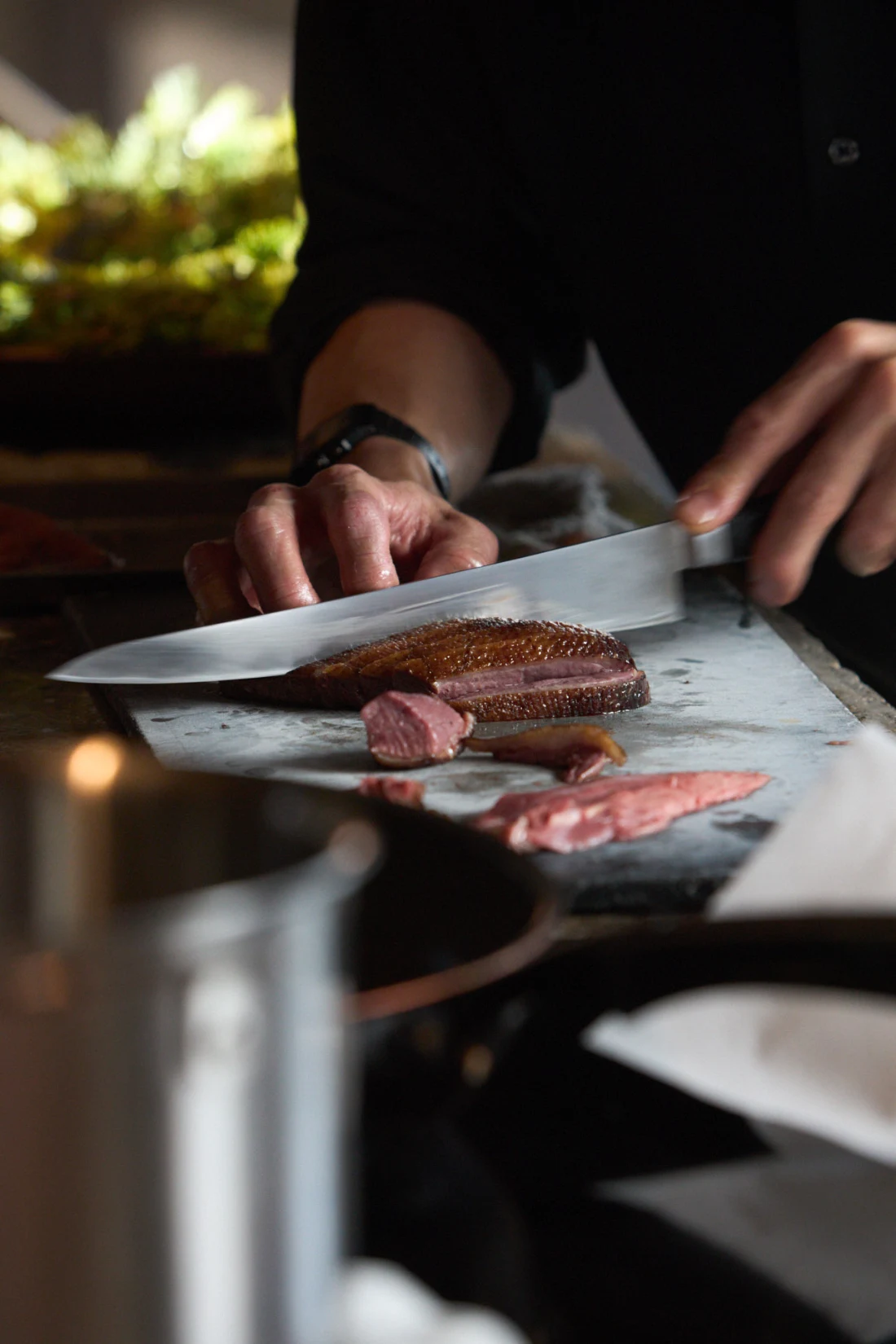
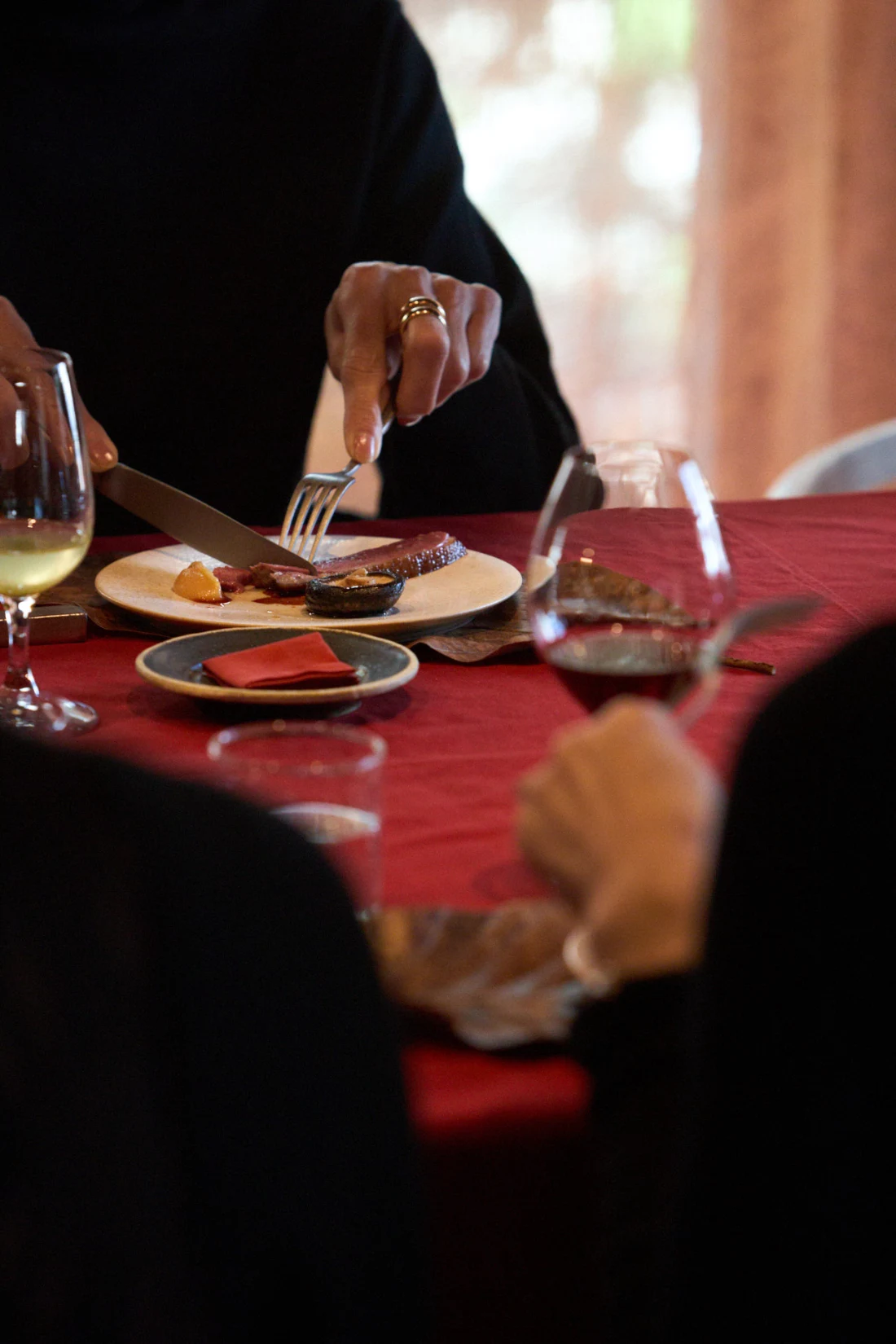
I don’t want to make a kaiseki restaurant. I want to use Japanese elements—ingredients like miso or koji—but in a subtle, maybe even hidden way.
I want to create a new kind of modern experience.
Not something loud or aggressive. I want it to feel quiet, but alive.
Like a tea ceremony. I used to go to sessions with Imai-san, and the atmosphere was very calm. But beneath that calm, there was a strong energy—something vibrating quietly.
I want to create that same kind of intensity. Not through performance, but through presence.
One Time, One Meeting
There’s a different way of paying attention—of experiencing—that gets created in this kind of quiet culinary moment, isn’t there?
In the tea ceremony, we have this idea from Sen no Rikyū—you probably know ichigo ichie, right? It means “one time, one meeting.” But the true meaning is even deeper.
Back then, after we shared a cup of tea, we might go into battle the next day. I might kill someone, or they might kill me. So it’s likely we will never meet again.
That’s why, today—right now—we sit, we quiet ourselves, and we drink this one cup of tea.
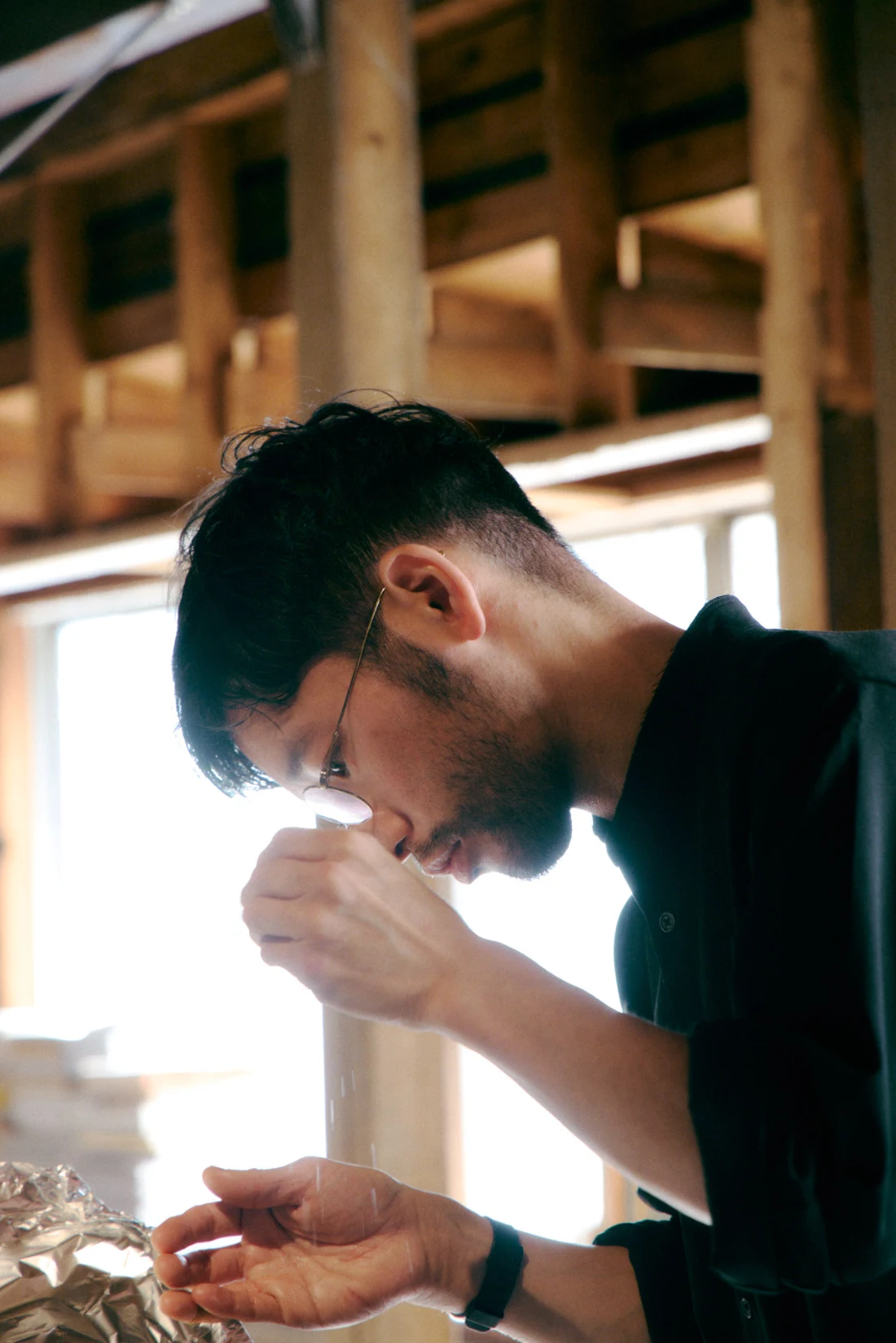
This same idea lives in what I want to create in my restaurant. Whether it’s in Kyoto or Copenhagen… I want to give people that feeling:
“This carrot—we can only eat it today. Right now, cooked over this fire, touched by a hint of Japanese flavor. Maybe koji. I don’t know. But only now. Maybe tomorrow I will die. But today, eat this carrot.”
It sounds extreme, but I believe this kind of awareness—this DNA—is in us as Japanese.
Different Versions of Myself
On another note—you’ve lived in Tokyo, Kyoto, and Copenhagen. They’re all very different cities.
What do you appreciate about each?
Each place brought out a different version of me.
In Tokyo, life is busy. You meet many people. I can function there, but it’s not quite me.
Kyoto is calmer. There’s more solitude. Sometimes I feel loneliness, but I can also touch the past. Like… maybe this road, someone walked it a thousand years ago. I’m drinking tea from a cup made 200 years ago.
But Copenhagen—that city is the most important for me. I became a new version of myself there. I joined Noma. I was already 30—not a kid anymore—but I found deep friendships.
When I arrived, I spoke no English. But I worked hard. And people understood me—not through words, but through attitude. And I understood them, too.
Also… I started painting again in Copenhagen. When I was five, my dream was to become a painter. It took 25 years, but at 30, I finally started painting by a lake in Christiania.
Subtle Layers
Do you feel that when you make a dish—especially when you’re composing it—there’s a similarity to painting?
I remember wanting to do oil painting because I love impressionist painters like Monet. But I couldn’t afford the tools or time. So I used acrylics.
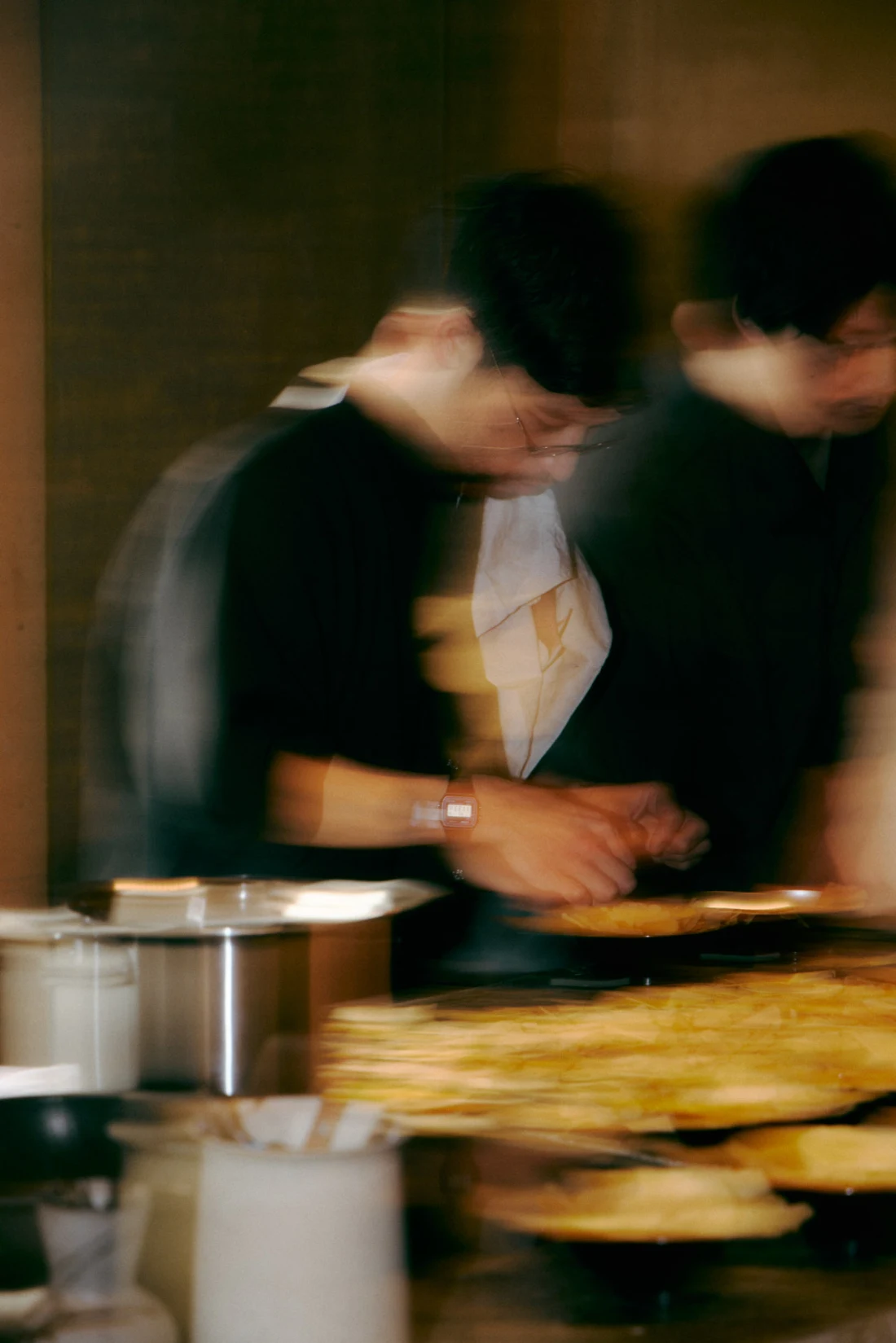
Even with acrylics, I could build up layers. And I realized: this is like cooking at Noma. We used tomato water, green strawberry water, kombucha, dashi… all these clear waters, each adding subtle layers.
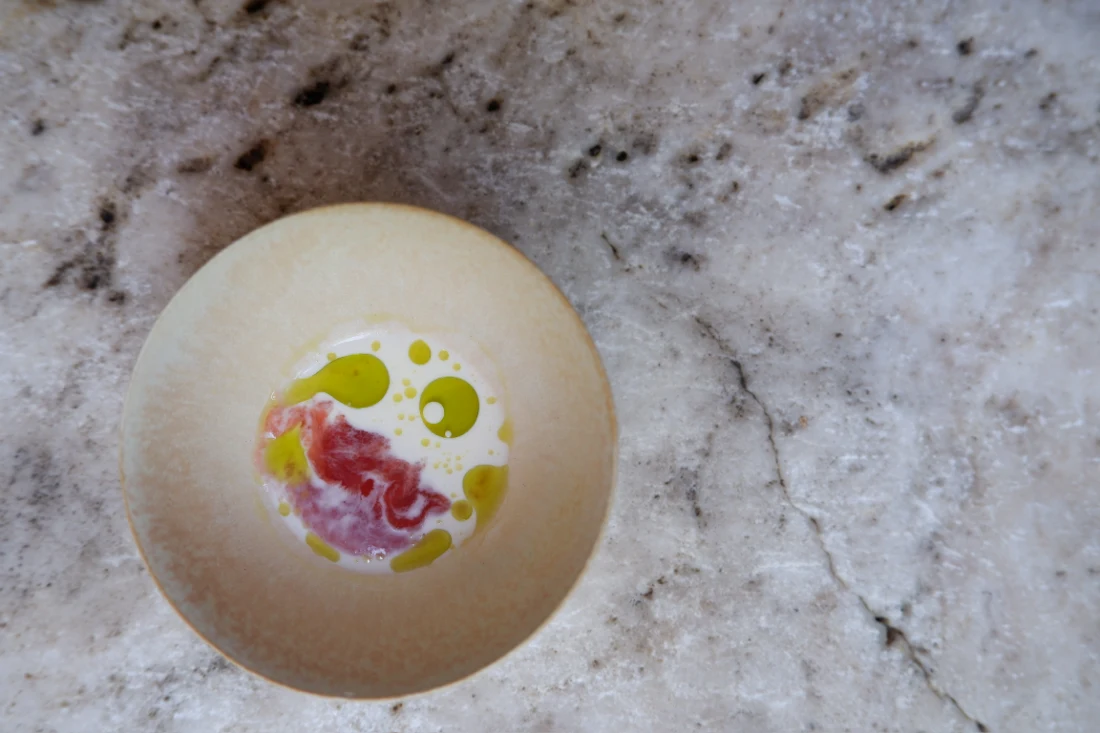
So now, my cooking is like painting. I might make a kombu stock with smoked maitake, then add a clear tea infusion, maybe some tomato water. Still clear, but full of layers—vibrant, emotional, deep.
Like a painting built from transparent glazes, it looks simple but carries complexity.
That’s my style.
You’ve mentioned you have a young child—your first.
As a father, what worries you about the future? And what gives you hope?
Yes, I have one child. And I do feel a lot of anxiety.
Sometimes I fear we’re losing so much culture. And maybe that’s true. But I also believe that knowing the problem points us to the answer.
That’s why I’m opening my restaurant—not just because I love cooking, but for the next generation. For my son. Anxiety becomes fuel. It becomes passion. A kind of mission.
So I’m trying to respond with action—with creation.
And my son… he gives me hope. He shows emotion, stands up, never gives up. He tries a hundred times, takes a little nap, and tries again. He gets hungry, cries, drinks milk—and keeps going.
When I look at him, I see how strong humans can be. How much we can learn. How creative and full of possibility we are. That gives me hope.
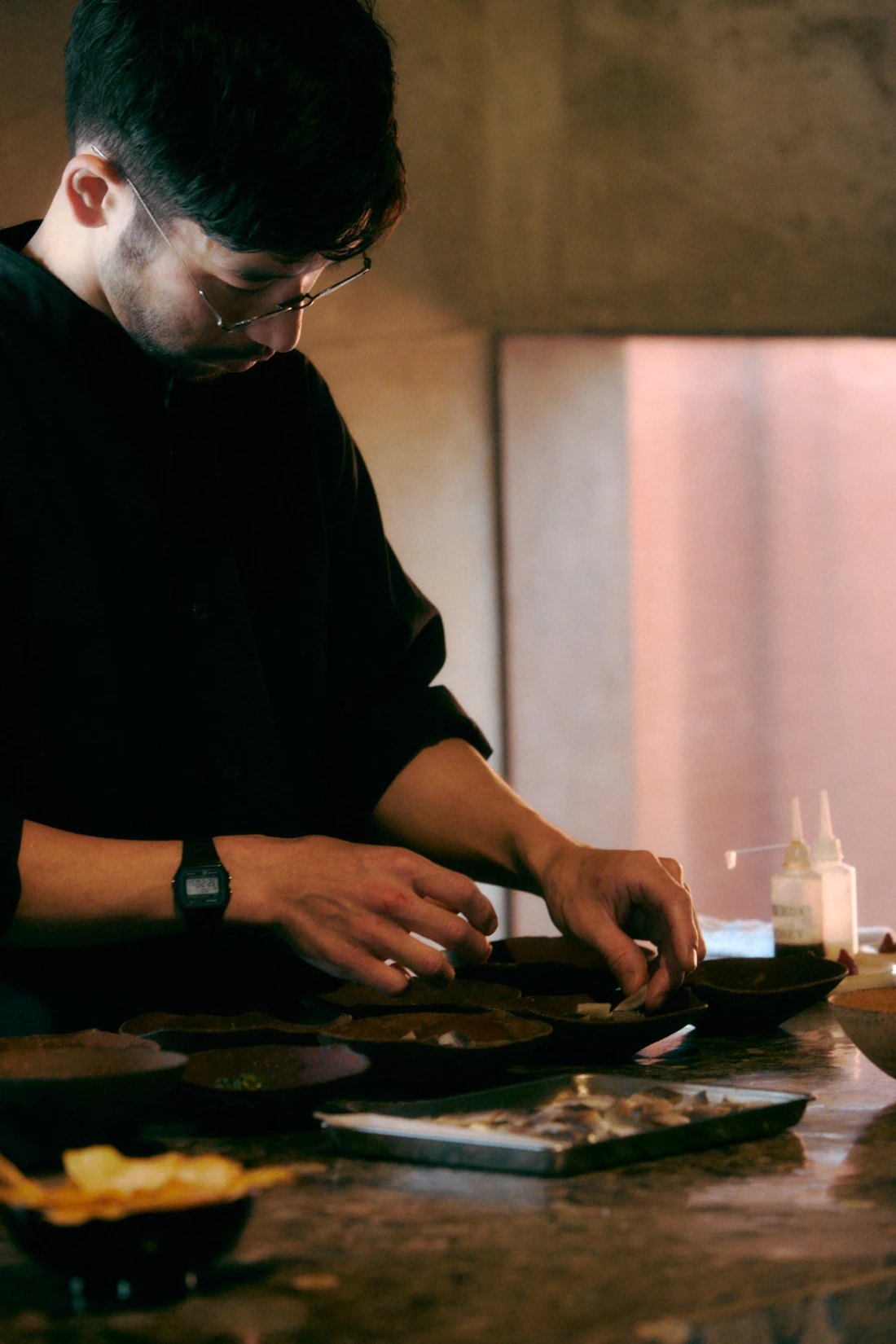
A Deep Sensitivity to the Present Moment
What is a Japanese concept or teaching you wish more people knew about—or lived in accordance with?
I think it’s something we already touched on earlier—this deep sensitivity to the present moment. Japanese people, especially in the past, had a strong ability to feel the moment.
Even in times of war, we would still try to notice what was around us—“Ah, today the birds are singing in a new way,” or “the river is telling us something.”
Before Buddhism, there was Shinto. The gods were everywhere—in stones, rivers, trees—and we would try to listen. So I think this sensitivity to the moment is very Japanese.
It’s about vibrancy, yes—but not by shouting or reacting loudly. It’s more subtle.
Even when we feel deep emotion, we try to express it in a quiet, refined way.
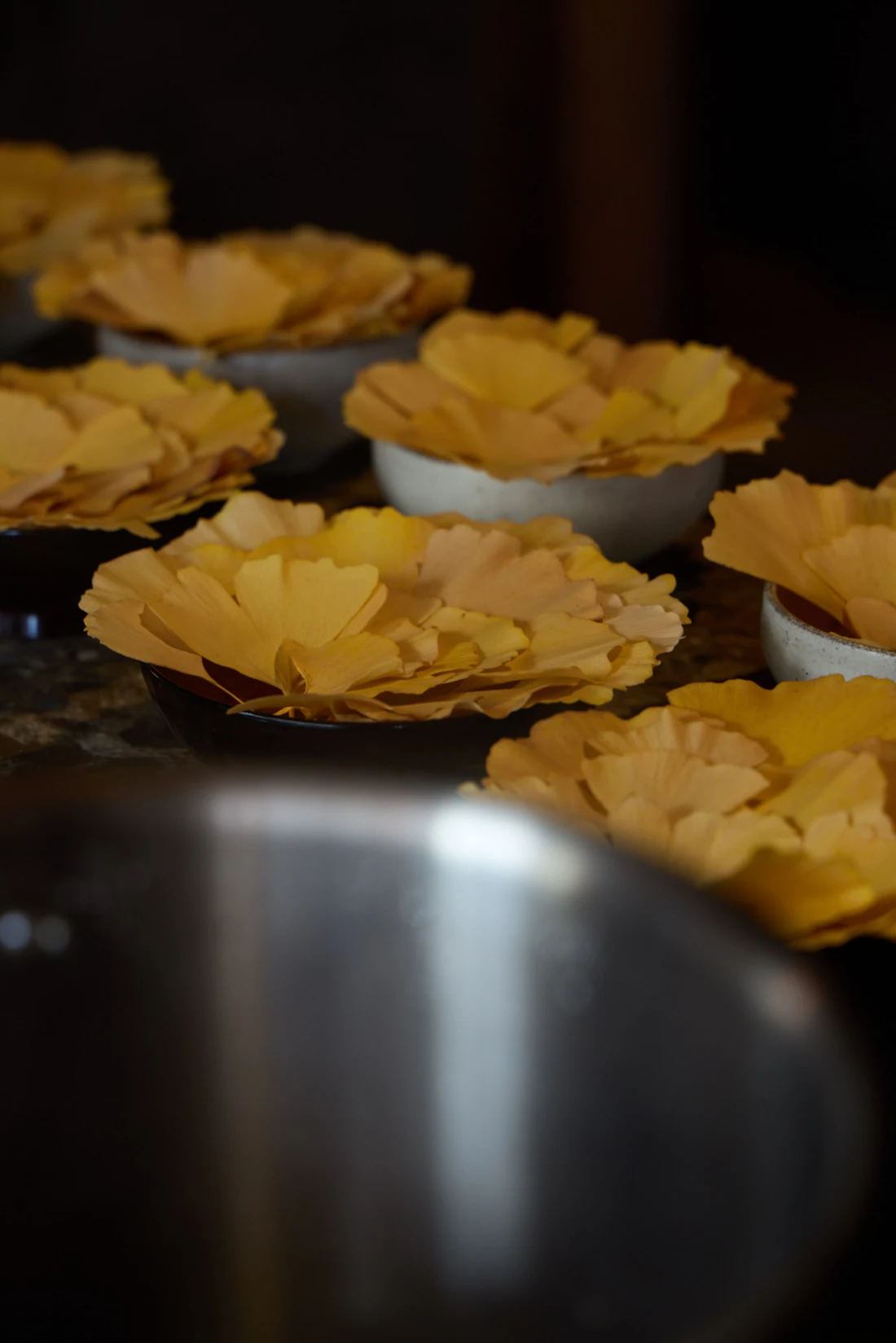
Like placing a single flower in a vessel. That one flower might carry a whole lifetime of experience. It’s like pouring water with great care—just one drop. But inside that drop is a world.
That’s something I think could be useful and beautiful for people everywhere.
The Most Beautiful Thing is Life Itself
Where do you find your inspiration—for your thinking, cooking, and creativity?
Of course, from memory. But also from words—like something I read by Haruki Murakami—or from a conversation, or even a feeling while biking.
Just last month, I created a new dish after feeling a sudden wave of reflection.
I was cycling and thought: This summer was intense. You can’t feel that in August, when you’re still in the middle of it. But when the air cools in autumn, you start to reflect on what just passed.
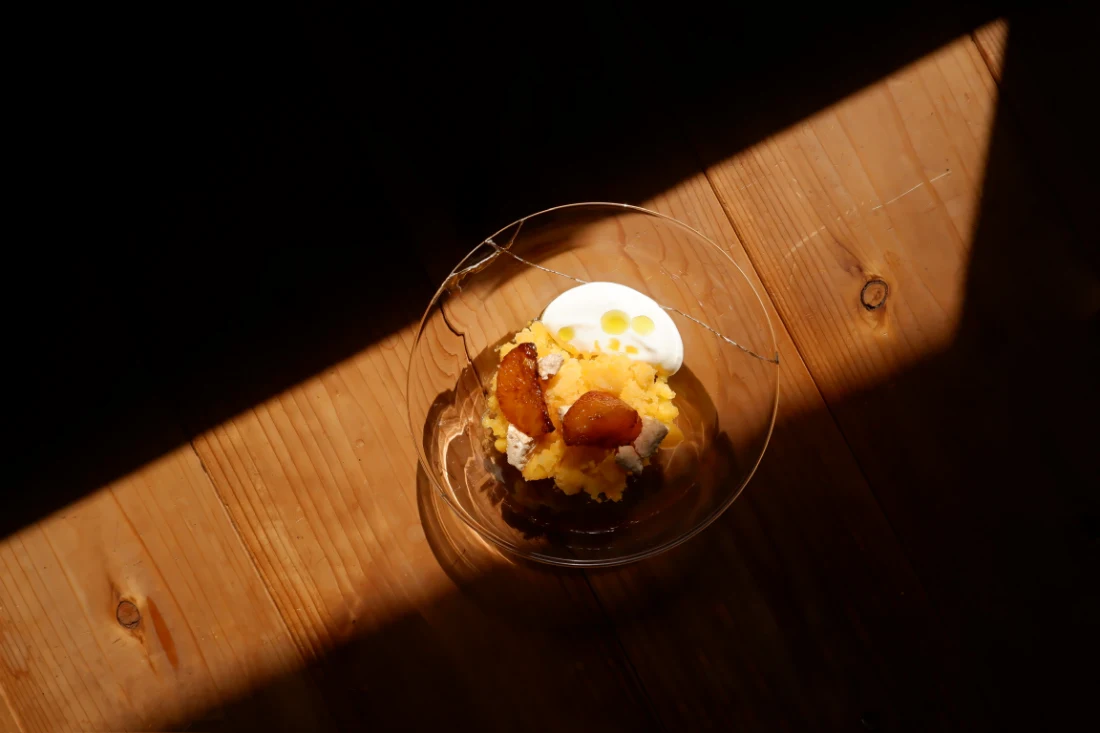
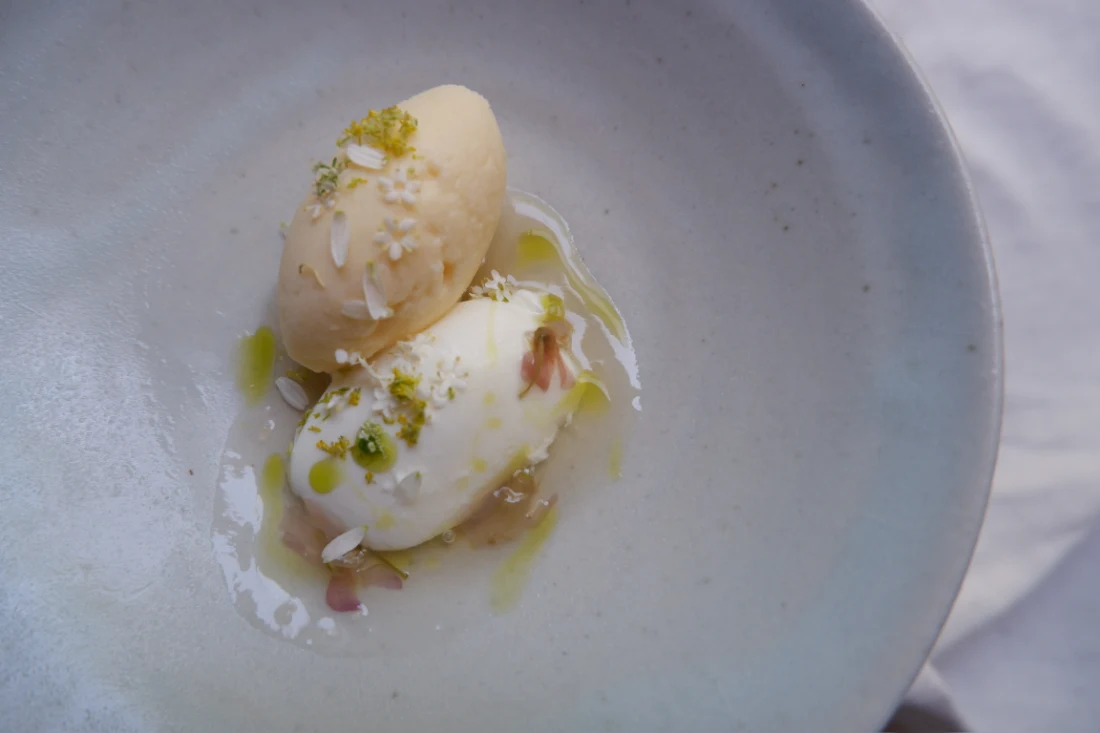
So I made a dish for autumn and winter using semi-dried prawn, semi-dried tomato, semi-dried strawberry—all preserved tastes of summer. I paired it with a terrine of intense dried vegetables. The dish is about memory. About how we carry seasons within us.
Sometimes, a painting also inspires me. I once saw a work where the artist placed a leaf next to a patch of green—not to paint the leaf exactly, but to create the impression of it. That feeling, that layering… it’s like memory, or cooking.
That kind of subtle art inspires me a lot.
As a closing question—what is true beauty to you?
That’s difficult.
Especially now, after becoming a father—my whole sense of life has changed.
I think true beauty is just… daily life.
These past ten months, my wife and I have laughed so much. And when I watch my son sleep… it’s just beautiful. So pure.
A few years ago, I might have said beauty is a painting or a piece of music. But those are all made by people. And maybe the most beautiful thing is life itself.
Nature, of course—but also a perfectly cooked dish. Even if an animal has been killed, sometimes, when it’s cooked with care and placed on the plate… it looks alive.
There’s still vibration. Still a presence. That too is beauty.