Breathing With the Mountains
Where did you grow up, and what shaped you early on?
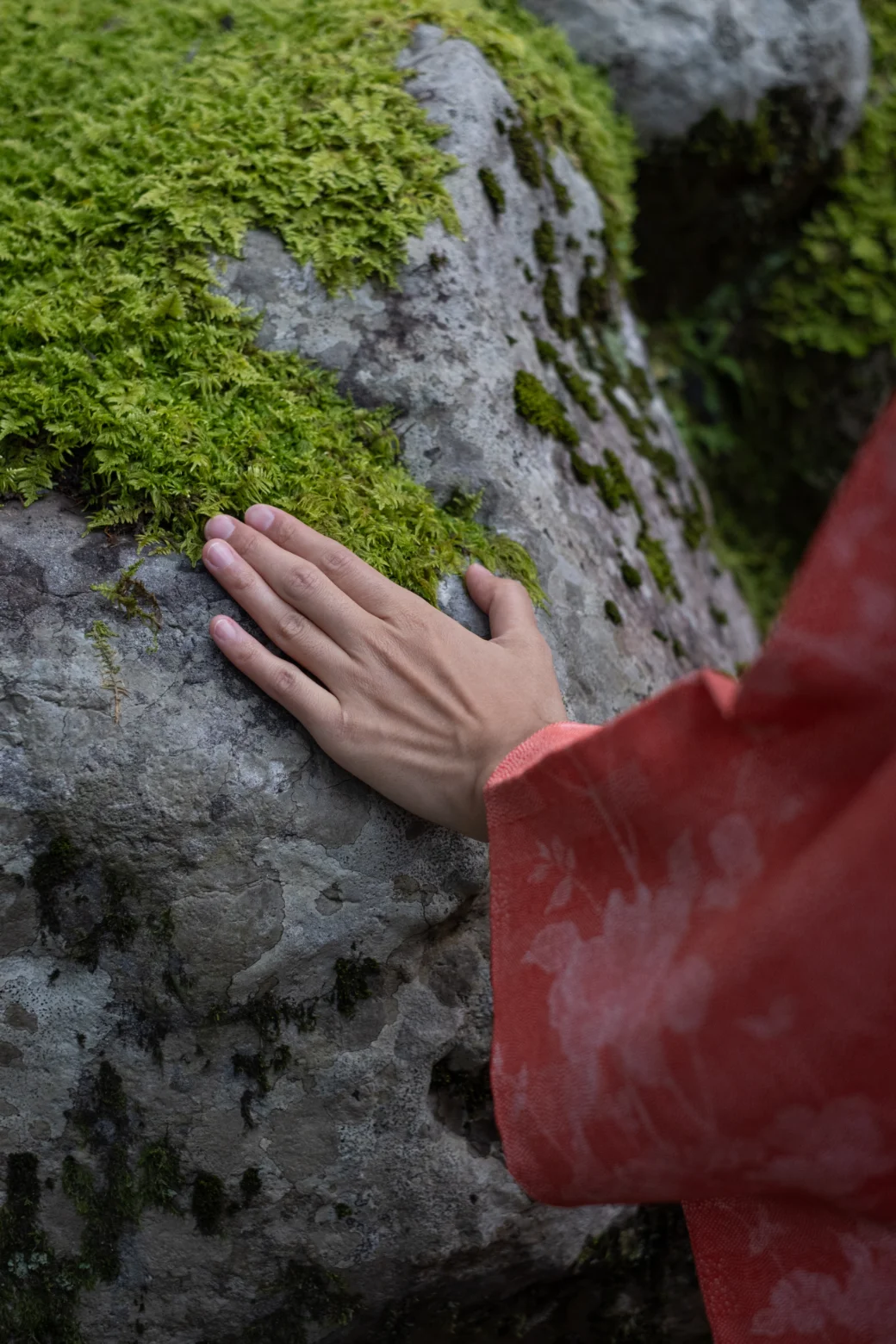
I grew up in Tokyo, Japan, but my grandparents live in Yamagata Prefecture in northern Japan—what we call “snow country.”
My grandfather is still alive at 90, and my grandmother is 85, both very healthy. They live in deep connection with the mountains, and I grew up watching that way of life.
As a child, I admired it. It was such a contrast to the city. The richness of his life—the true meaning of a rich life—always inspired me. It gave me a sense that we are not separate from nature.
My grandfather trained as a Yamabushi, a mountain ascetic, and that spiritual background was also part of it. Their life is like breathing with the mountains.
What I really admire is that they don’t see nature as an economic resource, but as a source of life. That attitude has stayed with me—not only from childhood, but even now.
I also spent part of my childhood in Cairo, Egypt, which opened my sense that there are many different ways of living and being in the world.
A Lesson for My Own Life
How did Zen first enter your life?
My first encounter with Zen came a year after I lost my father in a helicopter accident. I was 13 when he passed away. It was so sudden.
Of course, it was a huge tragedy. But I also made it into a lesson for my own life. What I learned is that this day—today—could be the last day of my life. The person I’m talking or laughing with—this could be the last moment.
So as a teenager, I had to rebuild my understanding of happiness. The love and support from my father had always been there, unconditionally—and then suddenly, it stopped.
I had to reconstruct what happiness means. That’s what led me to Zen.
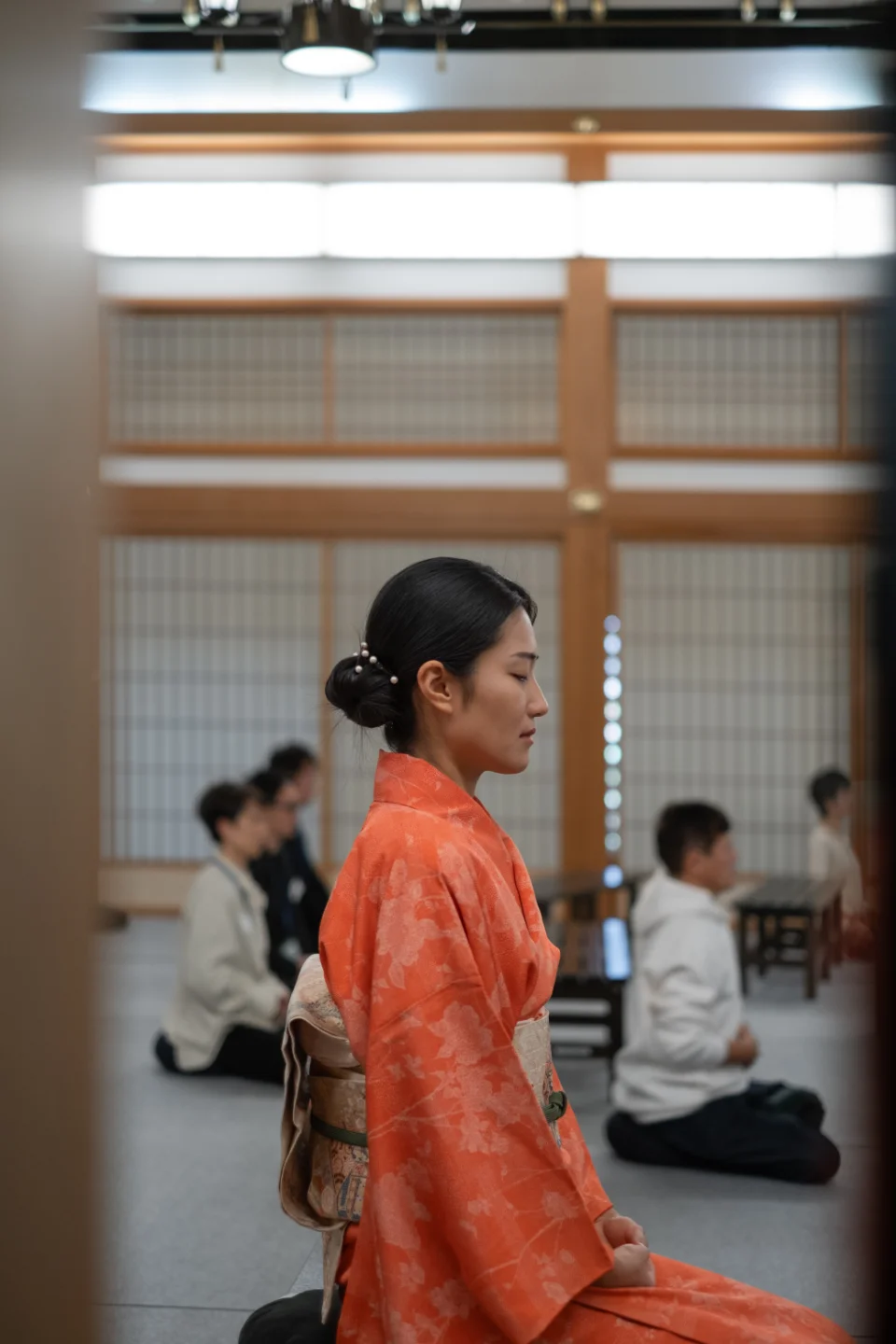
I visited a temple in Kyoto and saw a very short phrase: “I know what enough is.”
The deeper meaning is that if you pay attention to what you already have in your hands, you realize you already have more than enough.
Falling in Love with Zen
How did your path with Zen unfold from there?
I studied comparative thought and spirituality at university, and that’s how I continued exploring Zen. A major turning point was visiting India—the birthplace of Buddhism. I went several times, and later lived there for one and a half years.
Through those experiences, I realized that the way I had been educated was to see life as about 80 years long—that when the body ends, life ends.
But what I encountered in India was very different. It was more like one life spans thousands of years, and this current life is just one part of it. So there’s less pressure to achieve something within a limited time. That bigger perspective on life was something new to me.
I also had the experience of seeing a dead body on the street, and no one paid attention. Life and death were not separated. I think having that sense of death in your life allows you to live more vividly, more fully.
For me, Zen is something that truly moves my heart.
Metaphorically, I might say—I fell in love with Zen. It brings a sense of blissfulness into my life. And I believe that’s true for many people, if they learn the teachings of Zen.
Zen Eating: Reconnecting with Life
How did Zen Eating come into being for you, and what is it today?
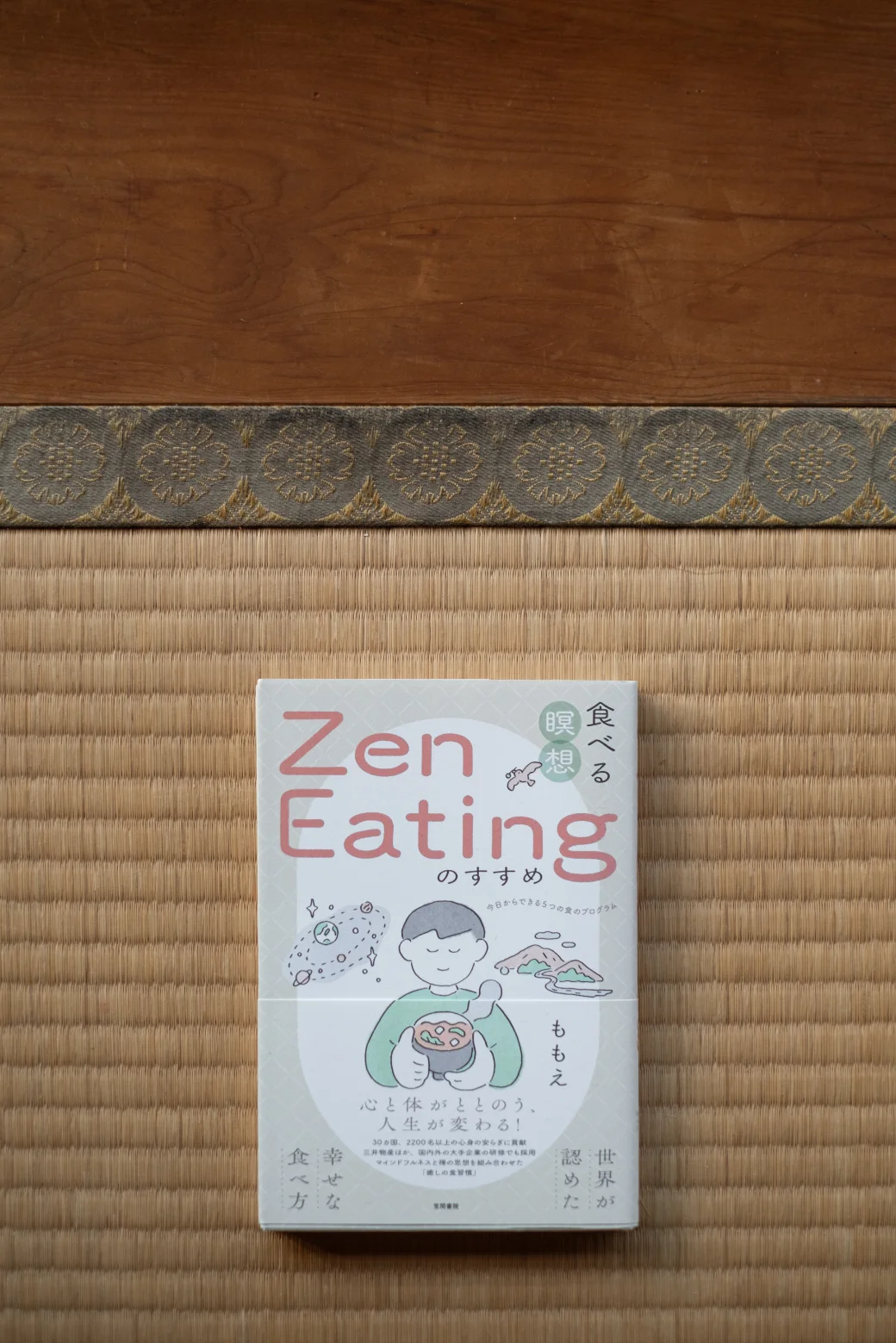
I started calling it “Zen Eating” at the beginning of the COVID pandemic. Before that, I was working in nutrition and food-related fields—focused on healthy eating.
But over time, I realized my understanding of well-being had become very narrow. I had started to see food as a resource for my health—like vitamins, calcium, protein. I was eating “healthy” to become happier, but it had the opposite effect. I became very judgmental—toward myself and toward others.
Through my Zen practice, I began to question that approach. I shifted from the question of what to eat to how to eat—with what mindset.
So I started delivering that message to people through practice: that meditative eating, the mindset of eating, can be embodied—can be practiced—through the actual act of eating. And I began sharing that as Zen Eating.
Zen Eating for me is a way to reconnect with the living planet, the Earth, by reconnecting with yourself.
I live in metropolitan Tokyo, and I believe many people in modern life feel a kind of separation from their own bodies. We tend to believe the mind is the leader of our existence, and the body has to follow.
But what I want to share through Zen Eating is that we are not separate. Your mind, your body, your spirit—whatever you call it—is all aligned as one. And that one is also aligned with the whole—the living Earth.
Not everyone can easily visit a Zen temple, but eating is something everyone already does. Through the practice of Zen Eating, your own being is the temple.
In Zen, there is a phrase: ichigyo zanmai—one practice, complete focus. Whatever you are doing, give yourself fully to it.
This applies not only for sitting in zazen, but to how you live each moment, the quality of awareness you bring to each activity.
Spirituality Rooted in the Voice of the Earth
You just described a sense of oneness — where the body, mind, and spirit are not separate, but part of a larger whole, aligned with the living Earth.
D.T. Suzuki once wrote that Japanese spirituality is rooted in “the voice of the Earth.” What does that evoke for you?
It’s difficult to put into short words, but I’ll try.
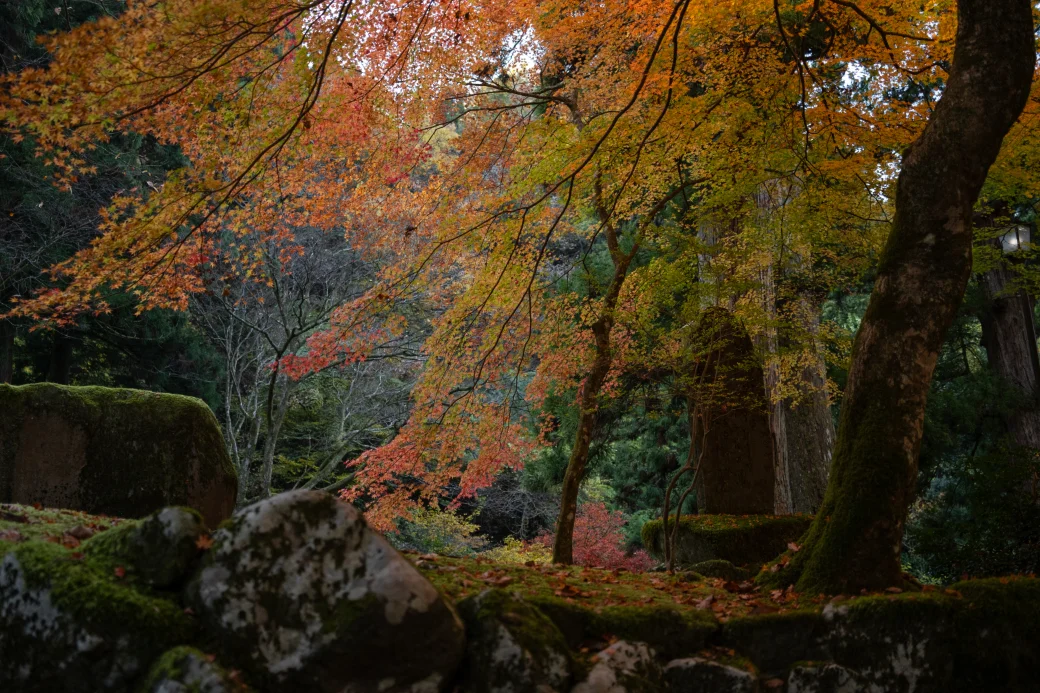
In Japanese, spirituality can be translated in several ways. But it is not something transcendent or otherworldly. It is something rooted in the Earth itself—something grounded, something earth-like.
In that sense, the innermost place of spirituality is found in the very ground. Japanese spirituality cannot detach itself from the Earth. It is not something beyond life—it is life itself.
So spirituality is not an escape from the material world, nor an ascent toward abstraction. It is a deep descent into the very ground of being.
In Japanese, there is also the word jinen, which is often translated as “nature.” But originally, it did not separate humans from nature. It meant that everything arises together, as one continuous unfolding. When that sense is felt, the idea of “conquering nature” disappears—because there is nothing separate to conquer.
And this is also why Zen emphasizes everyday actions. Practice is not somewhere else. It is how we live, moment by moment.
The Earth does not hurry. It knows that summer cannot come without spring. Seeds that are sown will not sprout until the time is right.
Opening Our Senses
How do we bring the spirit of Zen Eating to our everyday lives?
I think it begins with very simple awareness.
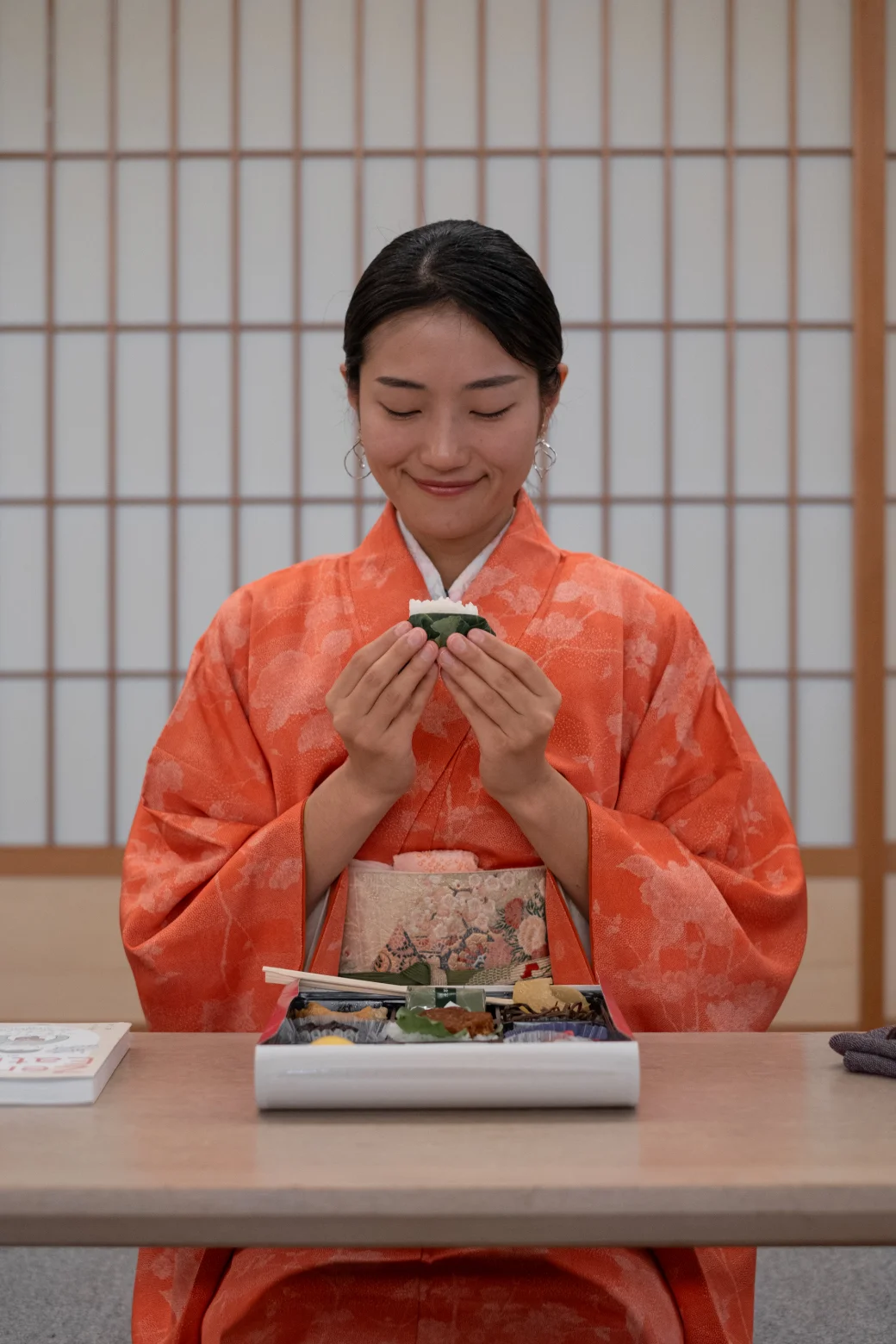
When you eat, just notice. Notice the taste, the texture, the temperature. Notice how your body responds.
And also notice where the food comes from. This vegetable, this grain—it didn’t just appear. It has a life, a background, a journey.
You don’t need to do anything special. Just eating with a little more attention already changes the experience.
Even one meal like this can be enough. It can bring you back to yourself.
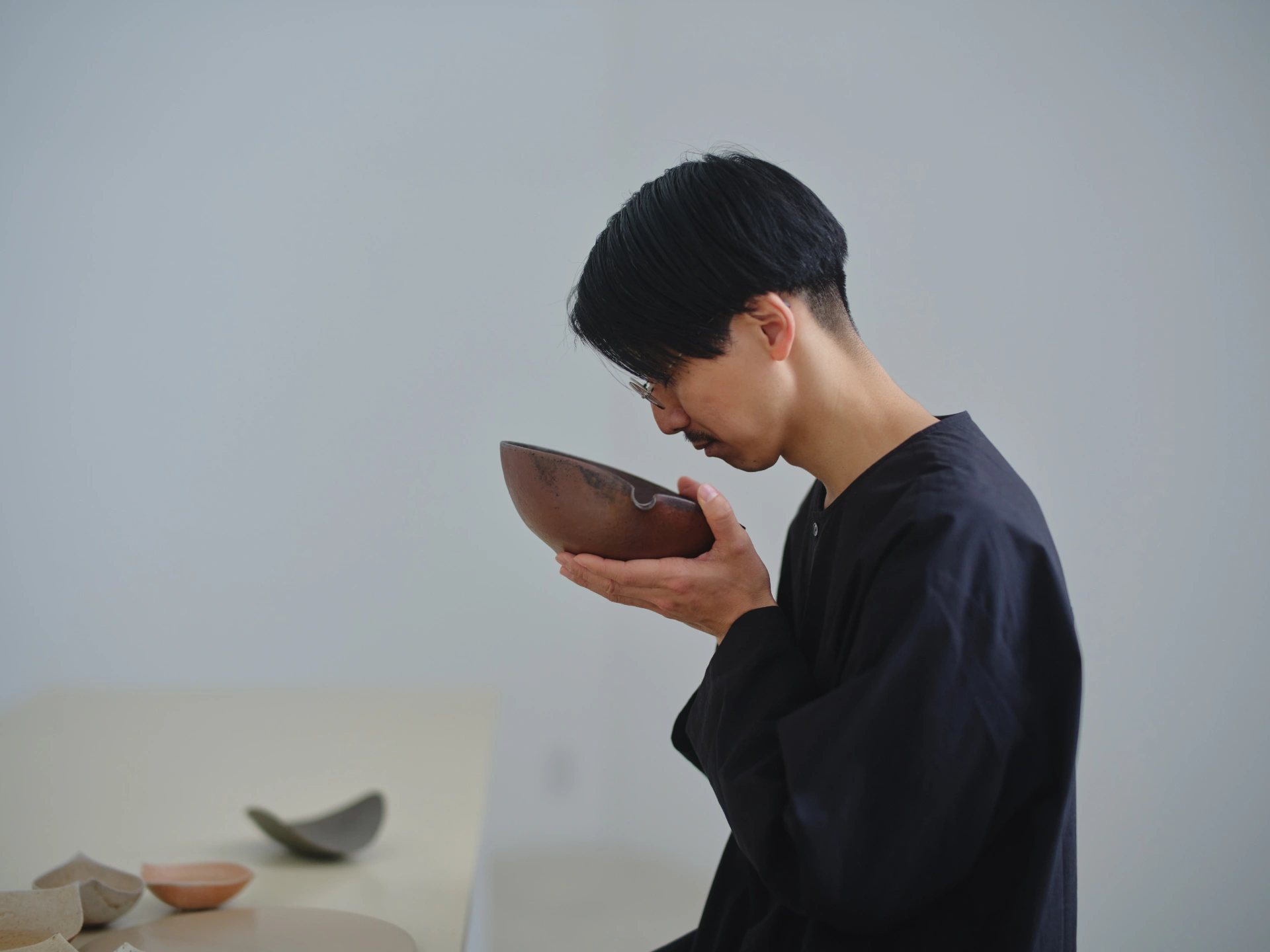
Sometimes this can be as simple as pausing before the first bite—smelling, sensing, and noticing what your body responds to.
We tend to forget our connection with ourselves.
So an important part of a full-bodied experience is remembering how to sense – how to smell, how to feel – by opening our senses. When you reconnect with yourself in a deep way, you and the environment become one.
Being Kept Alive
In your work, you often speak about ikasareteiru— “being kept alive.” What does this reveal about how we are living?
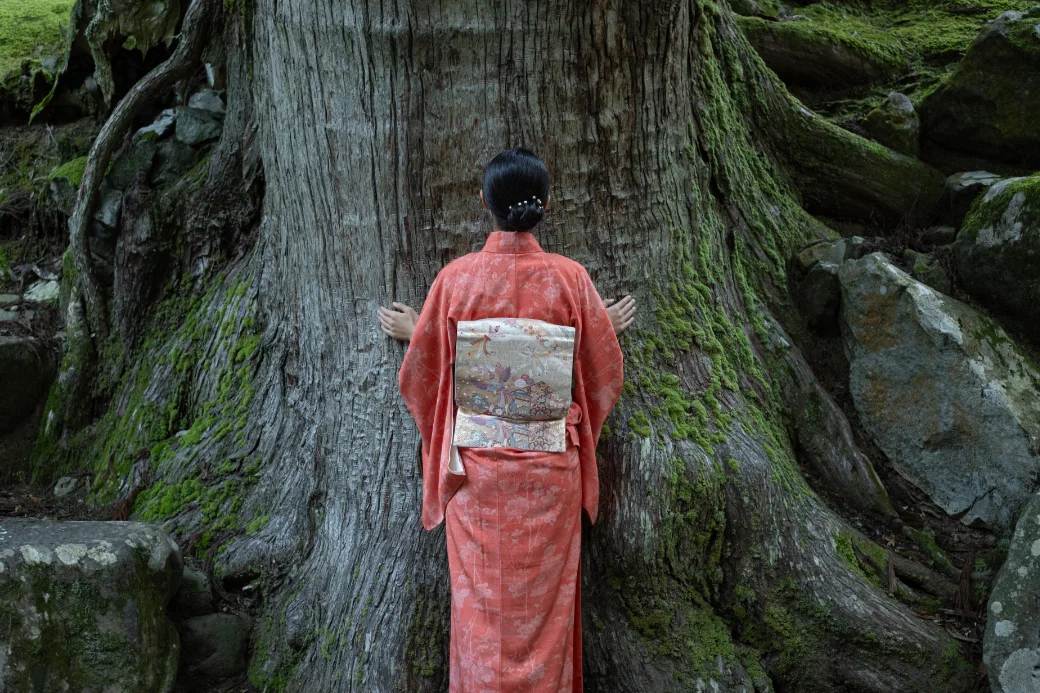
Ikasareteiru means that we are not living by ourselves—we are being kept alive by everything around us.
When we eat, we receive life. Plants, animals, water, sunlight—so many forms of life are supporting us. And yet, in daily life, we often forget this. We think, “I am living my life.”
But when I really feel into it, I realize—it’s not just me. I am being allowed to live.
Because you are not living through your own effort alone. You are living in interbeing—in interconnected being.
This feeling brings both humility and gratitude. And at the same time, it gives a sense of freedom and ease. I don’t have to carry everything by myself. I am already supported.
We are held within an ongoing circulation of life.
Beautiful.
A Sense of Wonder
In Japan, people say itadakimasu before each meal.
It is often translated as “I humbly receive,” but for me it feels much deeper than that. When we say itadakimasu, we are receiving life—not just food, but life itself.
If we really imagine what is in front of us—this one grain of rice, this one vegetable—it is not just something that appeared. It carries a long lineage of life. One generation becomes two, then four, then eight. After many generations, it becomes millions, billions.
In that sense, what we are receiving has been alive for 3.8 billion years—just like us.
So when we eat, we are receiving the continuation of life itself. When I feel this, it becomes something beyond gratitude. It becomes a sense of wonder—that this life is now becoming part of me.
Even the word arigatou means something like “it is rare to exist”—a miracle.
And I also have a dream: to become soil when I die. That brings me deep joy.
Knowing that I will return to the Earth—become one with mushrooms, tree roots, wild animals. I want to embody the understanding that humans are part of nature, not separate from it.
Becoming soil means being buried directly into the Earth.
Everyday Life as Practice
This touches on another core element of Zen Eating, the practice of letting go.
What do you feel many people are holding on to, and how does Zen help us release it?
Letting go is also something I am still learning. I believe it’s a lifelong practice.
There’s a Zen saying: “We were born with nothing.”
I think that opens our thinking—from egocentric satisfaction or egocentric self-love—to a paradigm of contentment. That’s something we can learn from letting go—that we were born with nothing.
But an interesting part of that teaching is that Zen also teaches, “Nothing is everything.”
In these sayings this is expressed through the Japanese character ku (空).
Ku is also translated as nothingness or emptiness. But in Zen emptiness or nothingness is the potentiality to become anything.
So it’s not the end of possibility—it is the baby of all possibilities.
Any final reflections you’d like to share with us?
Beauty is not something special or rare. It is already present in everyday life. When we slow down, we begin to notice it—in very simple things.
In a meal, in a moment, in the way light falls, or how something is prepared with care.
With awareness every single moment is a miracle. That’s what Zen has changed in my life.
Practice is when you take an ordinary action and bring special attention to it. For me, everyday life itself becomes a kind of practice.
That is where beauty exists.